OMAD 23:1 Intermittent Fasting Schedule Transition Formula: 4-Day Window Compression Protocol
One Meal a Day (OMAD), structured as a strict 23:1 intermittent fasting protocol (23 hours of continuous fasting paired with a single 60-minute feeding window), represents the pinnacle of daily time-restricted feeding logistics. For busy corporate professionals, shift workers, and fitness enthusiasts, consolidating daily nutritional intake into a single dedicated evening window eliminates meal-prep distraction, stabilizes daytime cognitive focus, and simplifies calendar scheduling. However, attempting to transition overnight from a standard three-meal routine or a casual 16:8 schedule directly into OMAD frequently triggers severe afternoon fatigue, hunger pangs, and social calendar conflicts.
Successful long-term adherence to a 23:1 schedule requires a calculated chronological transition. By compressing the daily feeding window incrementally across a structured 4-Day Window Compression Protocol, individuals allow digestive rhythms and daytime hydration habits to adapt systematically. In this logistical planning guide, we outline the exact hour-by-hour timing formulas, electrolyte scheduling checkpoints, and meal volume pacing strategies required to master an OMAD schedule with zero daytime disruption.
Key Logistical Benchmarks & Timing Rules
- The 4-Day Compression Ratio: Shift the daily fasting baseline progressively: Day 1 (16:8), Day 2 (18:6), Day 3 (20:4), and Day 4 (23:1 Target OMAD).
- Feeding Window Anchor: Schedule the 60-minute OMAD feeding window between 17:00 and 19:00, aligning with evening social obligations and post-work winding down.
- Electrolyte Timing Checkpoints: Schedule structured non-caloric electrolyte intake (sodium, potassium, magnesium in 500ml water) at fasting Hour 14 and Hour 20 to prevent afternoon sluggishness.
- Gastric Pacing Principle: Consume the single meal over 45 to 60 minutes rather than bolting food in 10 minutes, avoiding postprandial gastrointestinal distress.
- Zero Medical Claims: This protocol is strictly a logistical scheduling framework designed for calendar time management and routine synchronization.
1. The Chronological Compression Formula: Incremental 2-Hour Window Shifts
The human gastrointestinal tract operates on circadian hormonal entrainment; ghrelin (the primary hunger hormone) spikes at habitual feeding times. Attempting to leap from an 8-hour feeding window directly to a 1-hour window leaves three unmanaged daytime ghrelin pulses. The 4-Day Compression Formula mathematically scales fasting duration \( F_d \) by adding two hours of fasting time each consecutive day:
Where \( F_{\text{baseline}} = 16\,\text{hours} \) on Day 1. The daily operational parameters unfold as follows:
- Day 1 (16:8 Protocol): Fasting duration: 16 hours. Feeding window: 12:00 to 20:00 (8 hours). Standard lunch and dinner schedule.
- Day 2 (18:6 Protocol): Fasting duration: 18 hours. Feeding window: 13:00 to 19:00 (6 hours). Delayed lunch, early dinner.
- Day 3 (20:4 Warrior Protocol): Fasting duration: 20 hours. Feeding window: 14:00 to 18:00 (4 hours). Afternoon snack, early dinner.
- Day 4 (23:1 OMAD Protocol): Fasting duration: 23 hours. Feeding window: 17:00 to 18:00 (1 hour). Full target OMAD execution.
2. Daytime Hydration Logistics and Non-Caloric Electrolyte Pacing
During the extended 23-hour fasting window, the body continues shedding fluid and essential electrolytes through respiration and perspiration. Without dietary sodium intake from daytime meals, circulating blood volume contracts slightly, leading to afternoon brain fog or postural dizziness. A successful OMAD protocol establishes rigid logistical hydration checkpoints:
For an 80 kg individual, total daily fluid requirement equals 2.8 liters. This intake is logistically partitioned across the 23-hour fasting phase:
- Morning Wake-Up (07:00): 500 ml room-temperature water with 250 mg sodium (pure sea salt).
- Mid-Morning Focus (10:30): 400 ml black coffee or plain green tea (zero caloric additives).
- Checkpoint 1 (13:00 / Hour 14): 500 ml sparkling water with 350 mg sodium and 150 mg potassium chloride.
- Checkpoint 2 (16:00 / Hour 20): 500 ml cold water with 100 mg magnesium glycinate powder to buffer late-afternoon energy dips.
3. Single-Meal Volumetric Budgeting: The 60-Minute Gastric Pacing Strategy
One of the primary hazards of OMAD is the 'binge velocity trap'. An individual arriving at their 17:00 eating window after 23 hours of fasting is biologically primed to consume food rapidly. Ingesting 2,000+ calories within 15 minutes overwhelms gastric capacity, resulting in painful stomach distension and lethargy.
The 60-minute window should be logistically divided into three distinct culinary phases:
- Phase A (Minutes 0–15): The Primer. Consume a nutrient-dense, high-fiber starter such as a fresh leafy salad with olive oil or bone broth. This initiates gastric acid secretion and primes pancreatic enzyme release.
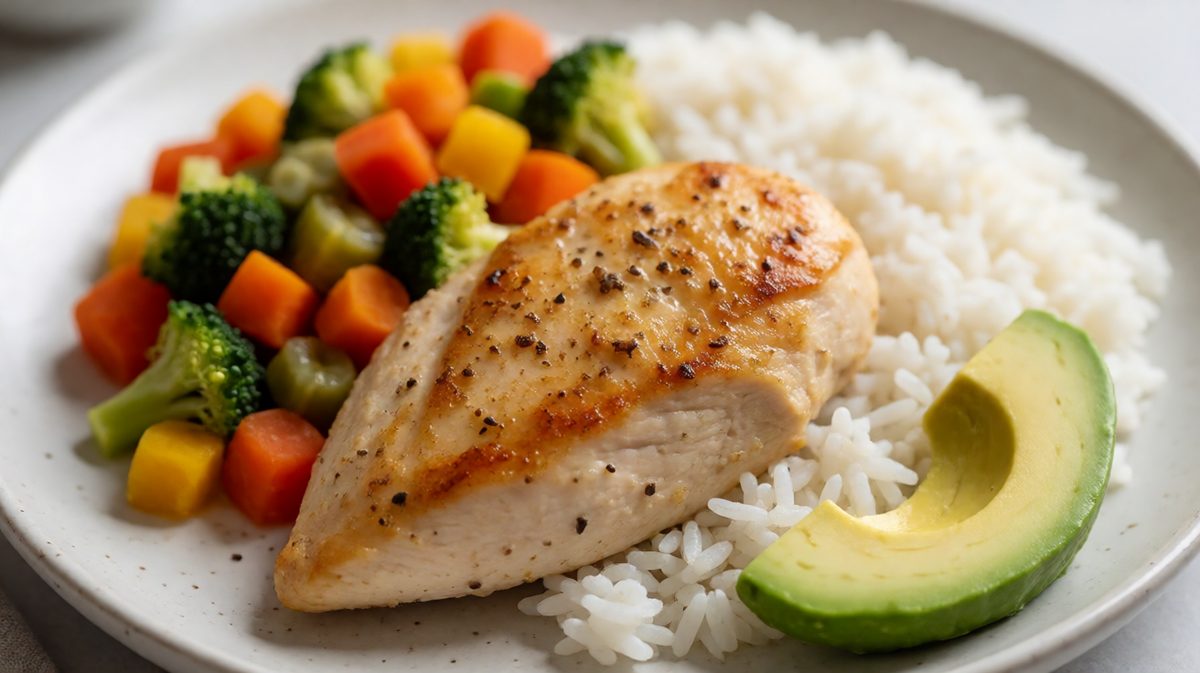
- Phase B (Minutes 15–40): The Main Course. Consume primary protein and complex carbohydrate sources (e.g., grilled salmon, sweet potatoes, roasted vegetables). Chew thoroughly to support enzymatic breakdown.
- Phase C (Minutes 40–60): Caloric Densification. If total caloric needs require additional intake, conclude with calorie-dense, low-volume foods such as almonds, walnuts, Greek yogurt, or avocado. Stop eating promptly at minute 60.

4. Calendar Scheduling and Social Integration Matrix
The table below provides a practical timeline schedule comparing standard 16:8, intermediate 20:4, and target 23:1 OMAD daily routines for professional desk workers:
| Time Marker | 16:8 Standard Schedule | 20:4 Warrior Schedule | 23:1 Target OMAD Schedule |
|---|---|---|---|
| 07:00–09:00 | Water / Black Coffee (Fast) | Water / Black Coffee (Fast) | Water / Morning Electrolytes (Fast) |
| 12:00–13:00 | Lunch Meal 1 (Feed) | Hydration Checkpoint (Fast) | Black Tea / Sparkling Water (Fast) |
| 14:00–15:00 | Desk Work / Hydration (Feed) | First Light Meal (Feed) | Electrolyte Checkpoint 1 (Fast) |
| 17:00–18:00 | Commute / Pre-Dinner (Feed) | Substantial Dinner (Feed) | Target OMAD 60-Min Feeding Window |
| 19:00–20:00 | Evening Dinner (Feed Ends) | Window Closed (Fast Begins) | Window Closed (Fast Begins) / Digest |
| 21:00–23:00 | Fasting Phase (Sleep Prep) | Fasting Phase (Sleep Prep) | Fasting Phase (Herbal Tea / Sleep) |
5. Managing Physical Activity and Workout Timing on OMAD
Engaging in heavy resistance training or high-intensity interval training (HIIT) requires strategic alignment with the OMAD window. Exercising 12 hours before your meal window forces muscles to remain in a catabolic recovery state without amino acid availability for extended periods.
The optimal logistical workout window is positioned between 15:30 and 16:45—immediately preceding the 17:00 meal. Training in a fasted state takes advantage of elevated growth hormone and epinephrine levels, while concluding the workout 15 minutes before the feeding window allows immediate post-workout nutrient replenishment without extending the daily eating duration.
6. Frequently Asked Questions (FAQ)
Can I drink sparkling water or zero-calorie soda during the 23-hour fast?
Plain sparkling water with natural mineral salts is completely acceptable. However, avoid artificially sweetened zero-calorie diet sodas during extended fasting; artificial sweeteners can trigger cephalic-phase insulin responses and induce sharp cravings.
What should I do if my schedule forces an occasional lunch meeting?
Adopt a flexible 20:4 or 16:8 window for that specific day. Simply open your feeding window at 12:30 for the business lunch and close it by 16:30, transitioning back to your evening 23:1 schedule the following day.
Is OMAD suitable for everyone?
No. OMAD is an advanced lifestyle time-management protocol. Individuals who are pregnant, nursing, underweight, or managing specific chronic medical conditions requiring timed medication with food should not engage in extended fasting schedules.
How do I prevent feeling cold during the late afternoon fasting hours?
Mild peripheral vasoconstriction is a common metabolic response to extended fasting. Sip hot herbal tea, hot black coffee, or warm salted water, and ensure light physical movement (such as a 10-minute walk) to stimulate circulation.
Planning Your Intermittent Fasting Schedule & Eating Windows?
Calculate your custom fasting hours, circadian meal timing, and timezone adjustments with our free logistical planning suite.
Launch the Intermittent Fasting Window & Schedule Calculator