Night Shift Intermittent Fasting Schedule Calculator: Effortless Master Plan
Key Takeaways: Maintaining a 16:8 intermittent fasting eating window during 12-hour night shifts requires aligning eating hours with active wake phases and establishing a structured 3-hour anchor nap protocol on transition days to prevent circadian misalignment.
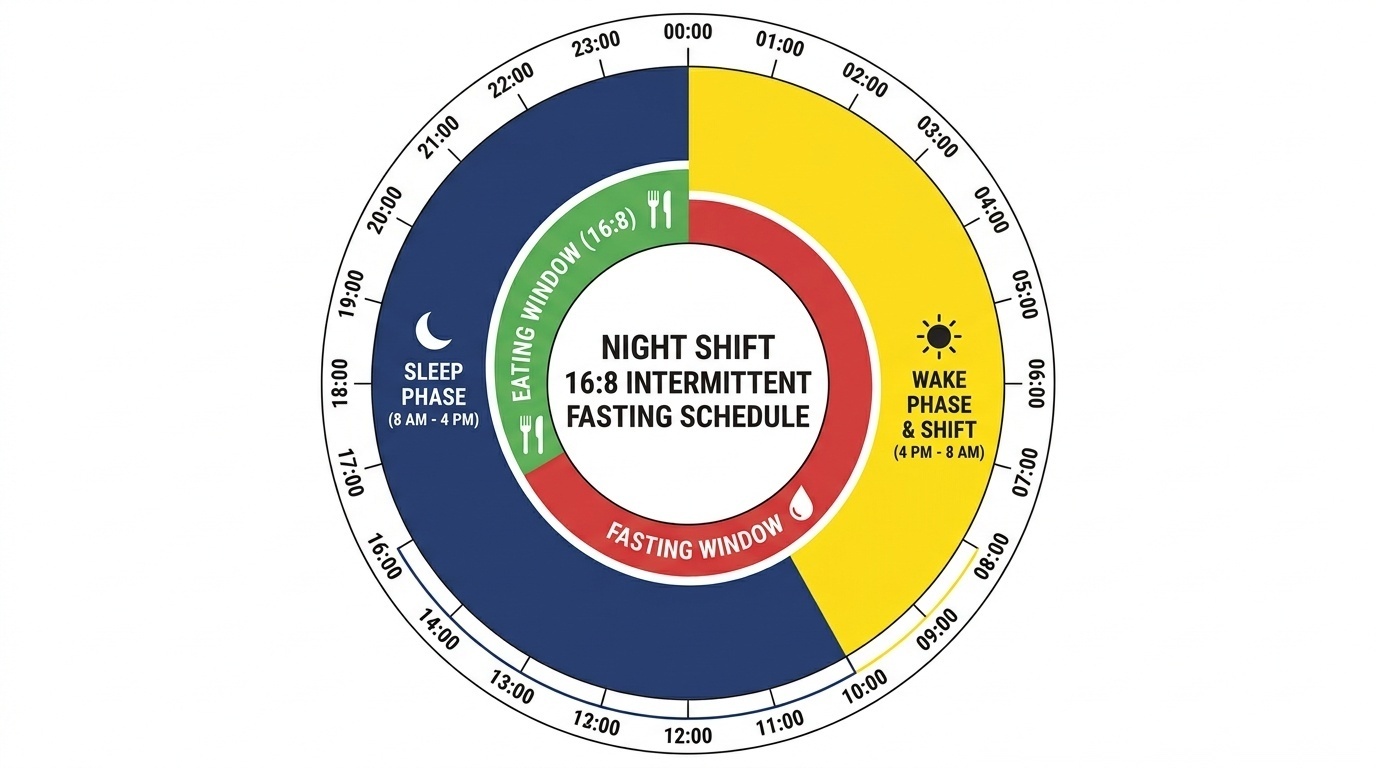
12-Hour Night Shift Eating Window Equation
Healthcare professionals, emergency responders, and industrial shift workers face severe circadian disruption when attempting standard day-focused fasting routines. Establishing a nocturnal 16:8 fasting window requires working backward from daytime sleep schedules.
The shift scheduling equation determines window boundaries:
\[ \text{Eating Window Start} = \text{Wake-Up Time} + \text{Anchor Buffer (1.5 Hours)} \]
\[ \text{Eating Window End} = \text{Eating Window Start} + 8 \text{ Hours} \]
For a 12-hour night shift operating from 7:00 PM to 7:00 AM:
- Daytime Sleep Phase: 8:30 AM to 4:30 PM (8 hours restorative sleep in a dark room).
- Wake-Up & Prep: 4:30 PM (1.5-hour anchor buffer for commute and water/black coffee).
- 8-Hour Eating Window: 6:00 PM (Meal 1: High protein & complex carbs) to 2:00 AM (Meal 2: Mid-shift nourishment).
- 16-Hour Fasting Window: 2:00 AM to 6:00 PM the following afternoon.
- Bedtime Protection Buffer: Closing the eating window at 2:00 AM ensures digestion finishes 6.5 hours before 8:30 AM sleep.
Calculate custom shift fasting hours using our interactive night shift intermittent fasting schedule calculator.
Transition Day Flip Protocol (Night Shift to Day Off)
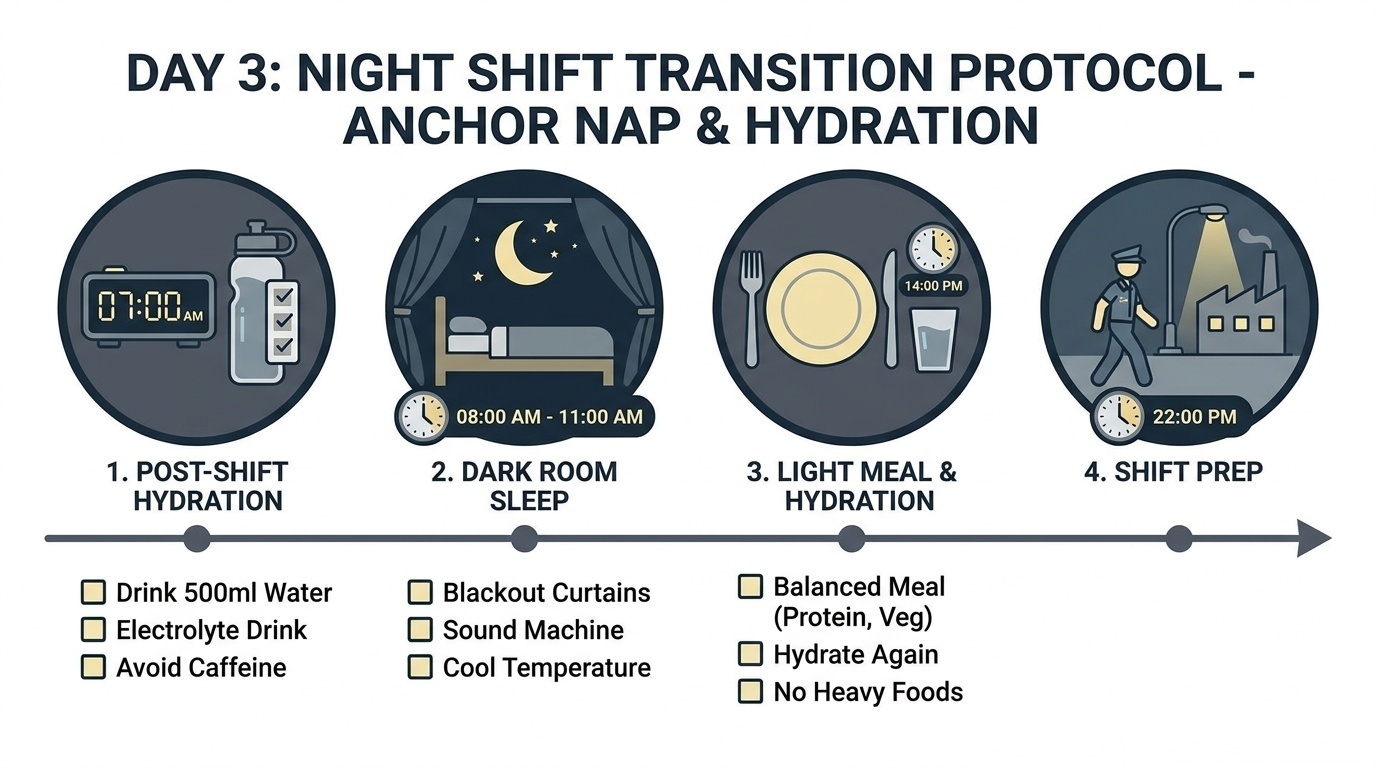
Flipping from night shifts back to normal daytime sleep schedules represents the single hardest logistical obstacle in shift work fasting. Execute this structured 3-hour anchor nap protocol:
| Time Phase | Action Step & Fasting Status | Metabolic Goal |
|---|---|---|
| 7:00 AM | End final night shift; maintain fasting state (water/electrolytes only). | Prevent digestive fatigue before sleep. |
| 8:30 AM - 11:30 AM | Take a strict 3-hour "anchor nap" in a dark room. | Clear acute sleep pressure without full night sleep. |
| 12:00 PM (Noon) | Break fast with a balanced protein/fat meal; open daytime window. | Reset peripheral circadian metabolic clocks. |
| 7:00 PM | Eat second meal; close eating window at 8:00 PM. | Prepare body for nighttime sleep phase. |
| 10:30 PM | Retire for full night sleep; resume standard daytime 16:8 window. | Complete circadian transition to day off. |
Review authoritative circadian rhythm sleep research at the National Institutes of Health (NIH) for non-medical biological background.
Night Shift Fasting Success Checklist
- Pace Electrolyte Hydration: Consume 500 ml of water with a pinch of mineral salt during 3:00 AM hunger waves to suppress ghrelin spikes.
- Avoid High-Glycemic Night Meals: Eliminate refined sugar during mid-shift meals to prevent post-prandial insulin crashes at 4:00 AM.
- Use Black Coffee/Tea Buffers: Limit plain black coffee or unflavored green tea to the first 4 hours of wakefulness (4:30 PM to 8:30 PM) to protect sleep quality.
- Flex Window on Rapid Rotations: Switch to a 14:10 maintenance window during rapid 2-day-on / 2-day-off shift rotations.