7 Ruthless Intermittent Fasting Window Schedule Tactics to Obliterate Fat
You have been skipping breakfast, drinking your black coffee, and waiting patiently for the scale to move. Yet, despite your discipline, your weight loss has completely stalled. The harsh reality of metabolic health is that starvation is not the goal; strategic hormone manipulation is. When your intermittent fasting window schedule is misaligned with your circadian biology, you create chronic stress instead of cellular healing.
Fasting is profoundly therapeutic when executed correctly. It is a powerful biological switch that shifts your body from constantly storing glucose to actively burning stored adipose tissue. However, simply eating less is not enough. You must understand the exact timelines of insulin degradation and cellular autophagy to truly transform your metabolic health.
Quick Answer / Key Takeaways * Your fasting window must last at least 14 to 16 hours to significantly suppress insulin and access stored body fat for fuel. * Aligning your eating window with daylight hours (Circadian Rhythm Fasting) drastically improves your body's ability to process carbohydrates. * Electrolyte depletion is the number one cause of fasting headaches, lethargy, and premature window breaking.
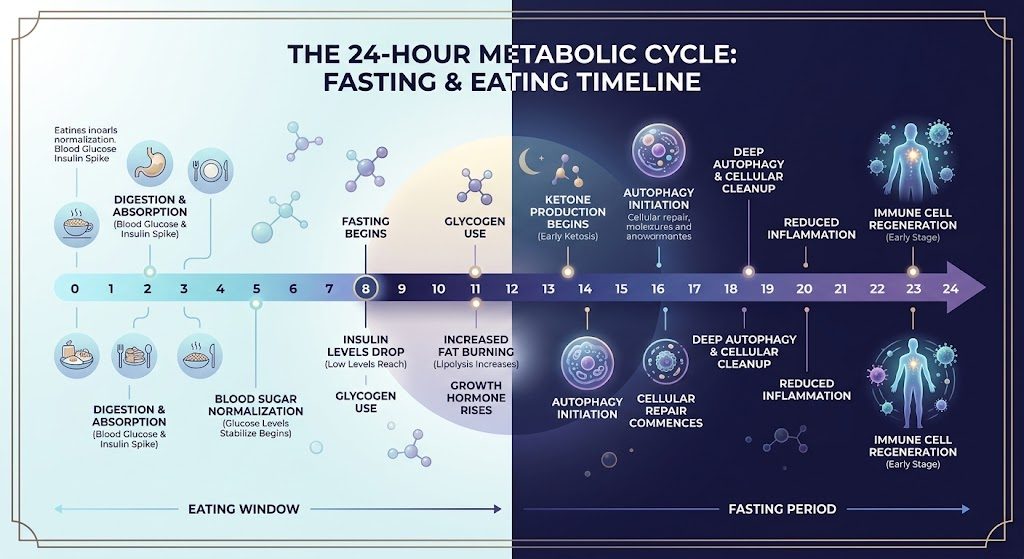
Why Your Intermittent Fasting Window Schedule Dictates Hormonal Shifts
Every time you consume food, particularly carbohydrates and proteins, your pancreas secretes insulin to shuttle glucose into your cells. As long as insulin is elevated in your bloodstream, the biochemical process of lipolysis (fat burning) is literally locked shut. The primary physiological goal of an intermittent fasting window schedule is to force insulin levels down to their baseline for extended periods.
According to research published by the New England Journal of Medicine on the effects of intermittent fasting, it takes approximately 10 to 12 hours of zero caloric intake to deplete your liver's glycogen stores. Only after this threshold is crossed does your body begin mobilizing fatty acids to produce ketones for brain and muscle energy.
The Circadian Science of Digestion and Autophagy
Your metabolism does not operate at the same efficiency at 8:00 AM as it does at 8:00 PM. Humans are diurnal creatures, meaning our digestive enzymes, insulin sensitivity, and gastric emptying rates are tightly synchronized with the rising and setting of the sun.
Eating a heavy meal late at night directly combats your melatonin production, leading to restless sleep and elevated morning cortisol. By shifting your eating window earlier in the day—for example, from 10:00 AM to 6:00 PM—you maximize your body's natural insulin sensitivity. Furthermore, pushing your fast past the 16-hour mark gently initiates autophagy, a cellular cleanup process where your body breaks down damaged proteins and dead cells for recycling.
Research from the National Institutes of Health (NIH) on circadian rhythm and metabolic health confirms that eating patterns aligned with daylight exposure produce superior metabolic outcomes.
7 Tactics to Optimize Your Fasting and Obliterate Fat
If you are ready to break through your plateau, implement these precise physiological tactics into your daily routine.
1. Anchor Your Schedule to Your Sleep Cycle
Do not force a fasting window that ruins your sleep. Aim to stop consuming calories at least 3 hours before your head hits the pillow to allow your core body temperature to drop naturally.
2. Hydrate with a Strict Electrolyte Protocol
When insulin drops, your kidneys excrete massive amounts of sodium and water. You must proactively replenish with high-quality sea salt, magnesium, and potassium during your fasting window to prevent cellular dehydration.
3. Break the Fast with Protein, Not Sugar
The most critical moment of your intermittent fasting window schedule is how you open it. Avoid insulin-spiking carbohydrates. Break your fast with a lean protein source and healthy fats to maintain steady blood glucose.
4. Utilize Black Coffee as a Metabolic Catalyst
Caffeine is a potent tool during the fasting state. Black coffee or green tea stimulates the sympathetic nervous system, slightly increasing lipolysis and blunting your hunger hormones (ghrelin) without breaking the fast.
5. Shift the Window Dynamically for Women's Hormones
Pre-menopausal women must adapt their schedules to their menstrual cycles. Prolonged fasting during the luteal phase (the week before menstruation) can elevate cortisol and deplete progesterone. Shorten the fasting window to 12 or 14 hours during this week.
6. Implement "Fat Fasting" for Beginners
If a pure water fast is too aggressive, consume a tablespoon of MCT oil or grass-fed butter in your morning coffee. Pure fat does not trigger an insulin response, keeping you in a state of lipolysis while providing brain energy.
7. Track the Window with Ruthless Consistency
Your body thrives on predictability. Constantly shifting your eating window confuses your circadian rhythm and digestion. Lock in your specific hours and stick to them for at least 21 days to allow metabolic adaptation.

Your Sustainable Fasting and Electrolyte Checklist
Before you begin your next fasting block, ensure you have completely bulletproofed your environment.
- Prepare your sodium: Have a high-quality, unflavored electrolyte powder ready on your counter for the morning.
- Plan your breaking meal: Pre-cook a protein-dense meal (like chicken breast or eggs) so you aren't tempted to grab processed carbohydrates when the window opens.
- Audit your morning beverages: Ensure your morning teas or coffees contain absolutely zero artificial sweeteners, as some can trigger a cephalic phase insulin response.
- Dial in your exact timing: Stop guessing when to eat. Use our dedicated Intermittent Fasting Window Calculator to generate a custom, scientifically backed timetable tailored to your lifestyle and goals.
Important Medical Considerations
The information provided in this article is for educational purposes only and does not substitute for professional medical advice. Fasting is contraindicated for pregnant or breastfeeding women, individuals with a history of eating disorders, and those managing Type 1 Diabetes. Always consult with your primary care physician before beginning any fasting regimen.
For additional research-backed health information and evidence-based wellness strategies, explore resources from the Mayo Clinic on intermittent fasting and the American Heart Association on cardiovascular health.