4 Essential Protocols to Track Fasting Autophagy Timelines and Regulate Insulin Dynamics
Intermittent fasting has evolved from a popular dietary trend into a scientifically validated metabolic intervention. While many adopt intermittent fasting for weight management, the primary cellular benefit occurs beneath the surface: the activation of autophagy and the suppression of circulating insulin levels.
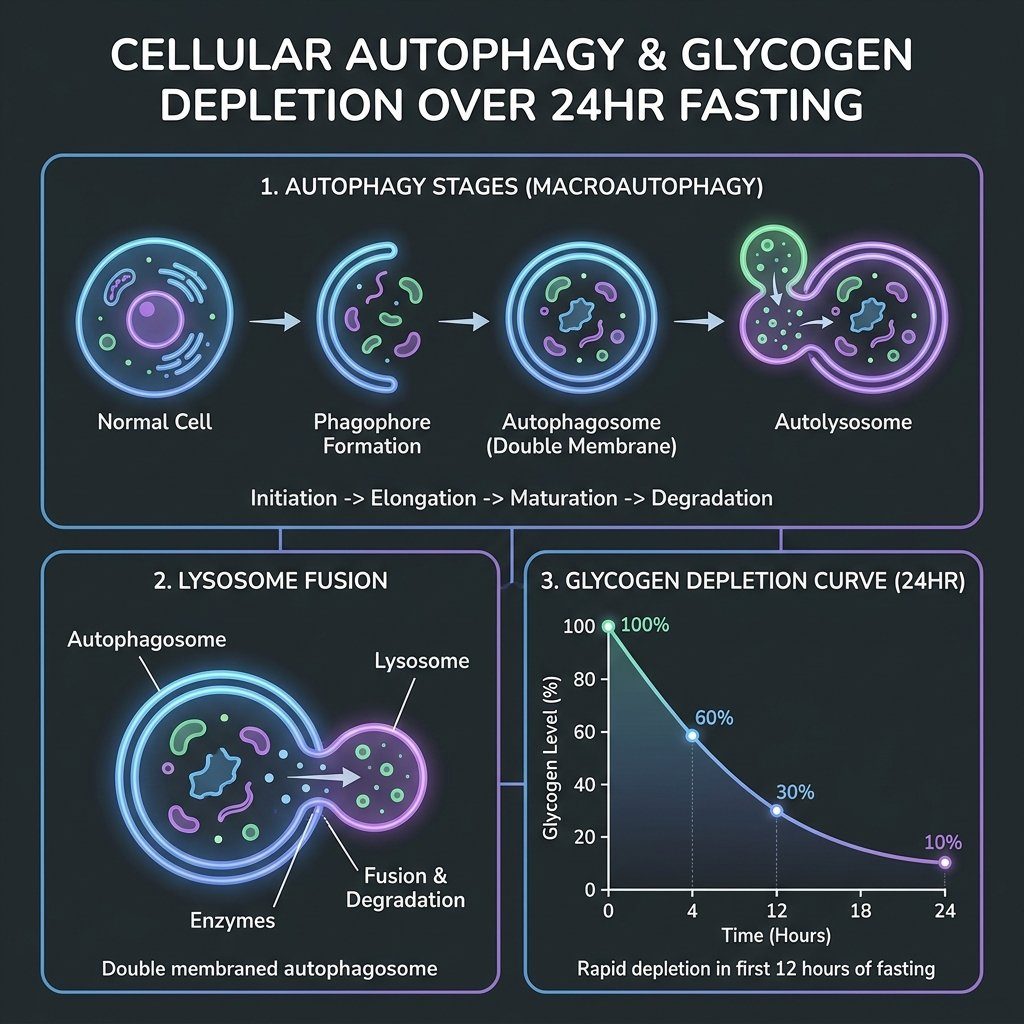
Autophagy—derived from the Greek terms for "self-eating"—is the evolutionary process by which cells clear damaged organelles, misfolded proteins, and intracellular pathogens. However, cellular self-cleaning does not operate like an instantaneous light switch. Instead, autophagy ramps up along a biological timeline directly governed by hepatic glycogen depletion and circulating plasma insulin.
Understanding how fasting windows influence these physiological checkpoints allows you to select an intermittent fasting protocol tailored to your metabolic goals, energy requirements, and lifestyle.
Quick Answer / Key Takeaways * Autophagy Onset: Substantial macroautophagy initiation begins between 16 and 18 hours of continuous fasting as liver glycogen reaches depletion. * Peak Cellular Clearance: Maximal autophagy rates are generally observed between 24 and 36 hours of fasting under suppressed insulin conditions. * Insulin Dynamics: Serum insulin levels drop significantly within 12 hours of fasting, triggering a metabolic shift toward lipolysis and ketone production.
Hormonal Stages, Glycogen Depletion & Autophagy Activation
To optimize your fasting window, it is helpful to view the post-absorptive state as a sequence of three distinct physiological phases:
- The Absorptive Phase (0–4 Hours Post-Meal): Exogenous glucose elevates blood sugar, stimulating pancreatic beta cells to secrete insulin. Nutrients are shuttled into muscle and liver tissue for energy production and glycogen storage; autophagy is suppressed by active mTORC1 signaling.
- The Post-Absorptive Phase (4–12 Hours Post-Meal): Blood glucose normalizes, and circulating insulin levels drop sharply. The liver initiates glycogenolysis to break down stored glycogen into free glucose, keeping blood sugar stable.
- The Fasting & Ketotic Transition Phase (12–24 Hours Post-Meal): Hepatic glycogen stores become substantially depleted. As AMPK (AMP-activated protein kinase) senses low cellular energy, it inhibits mTOR and upregulates autophagic machinery, prompting cells to recycling damaged internal structures.
Metabolic Timeline Benchmarks Across Fasting Windows
The following matrix compares key physiological markers across standard fasting durations:
| Fasting Duration | Primary Metabolic Fuel Source | Circulating Serum Insulin Level | Estimated Autophagy Activation Level | Primary Clinical / Wellness Objective |
|---|---|---|---|---|
| --- | --- | --- | --- | --- |
| 12 Hours | Glucose & Early Free Fatty Acids | Baseline / Moderate Drop | Baseline Initiation (Early Clearance) | Circadian Rhythm Alignment & Digestive Rest |
| --- | --- | --- | --- | --- |
| 16 Hours | Free Fatty Acids & Mild Ketones | Suppressed (Low) | Moderate (Hepatic & Vascular Clearance) | Body Composition & Maintenance Autophagy |
| --- | --- | --- | --- | --- |
| 20 Hours | Beta-Hydroxybutyrate (Ketones) | Very Low | High (Systemic & Neuronal Upregulation) | Targeted Insulin Sensitivity & Weight Loss |
| --- | --- | --- | --- | --- |
| 24–36 Hours | Endogenous Ketone Bodies | Basal Nadir | Peak / Maximal Cellular Renewal | Deep Cellular Repair & Anti-Inflammatory Shift |
For clinical trial data and molecular mechanism studies on human fasting biomarkers, consult the .

4 Fasting Protocols to Regulate Insulin & Trigger Autophagy
Depending on your daily schedule and metabolic tolerance, select one of the following 4 structured protocols:
- The 16:8 Protocol (Time-Restricted Feeding): Fast for 16 consecutive hours followed by an 8-hour feeding window. Ideal for beginners, this schedule lowers daily insulin exposure and provides a reliable 2-to-4-hour daily window of moderate autophagy.
- The 18:6 Protocol (Enhanced Autophagy Window): Fast for 18 hours with a 6-hour eating window. Extends the period of glycogen depletion by two additional hours, promoting elevated ketone production and deeper autophagic activity.
- The 20:4 Protocol (The Warrior Window): Incorporates a 20-hour fast followed by a 4-hour feeding window. Accelerates fat oxidation and initiates robust autophagic cellular renewal before your daily meal.
- The 24-Hour OMAD Protocol (One Meal A Day): Consists of a full 24-hour fast executed 1 to 3 times per week. Pushes hepatic glycogen to near-complete depletion, maximizing autophagic gene expression and boosting insulin sensitivity.
Sustainable Habit Roadmap & Medical Guidance
Fast safely by staying hydrated and replenishing essential electrolytes (sodium, potassium, and magnesium) during extended fasting windows.
Medical Disclaimer: Intermittent fasting protocols are not recommended for individuals under 18, pregnant or breastfeeding women, individuals with a history of eating disorders, or those managing type 1 diabetes without direct physician oversight.
To calculate your exact eating windows, fasting hours, and projected autophagy milestones, check out the free Intermittent Fasting Window Calculator.