20:4 Warrior Fasting Window Two-Meal Spacing Schedule Formula: The 4-Hour Fueling Model
The 20:4 intermittent fasting protocol—popularly known as the Warrior Diet—represents an advanced temporal energy budgeting schedule that compresses daily food intake into a narrow 4-hour evening window preceded by 20 continuous hours of fasting. While standard 16:8 schedules provide ample time to digest three separate meals across eight hours, operating within a compact 4-hour window presents severe digestive and chronological logistics hurdles. Attempting to consume an entire day's target caloric and macronutrient requirements in a single, massive 4-hour grazing binge frequently causes severe gastrointestinal distress, gastric reflux, lethargy, and disrupted deep sleep architecture.
Successfully sustaining a 20:4 fasting schedule requires precision time management and structured meal spacing. Rather than consuming a continuous, uncontrolled buffet of food throughout the 4 hours, experienced practitioners divide the feeding window into two distinct, mathematically timed nutrition phases: an initial nutrient-dense breaking-fast meal (Break-Fast Phase) followed by a substantial, satiating dinner meal (Anchor Phase), separated by a calculated digestive rest interval.
In this logistical scheduling guide, we formulate the 20:4 Warrior Fasting Window Two-Meal Spacing Schedule Model. By examining gastric emptying rates, chronological spacing intervals, fluid separation rules, and circadian sleep cutoff limits, individuals can execute a sustainable 20:4 lifestyle with zero digestive fatigue and optimal energy stability.
Key Takeaways & Scheduling Principles
- The 20:4 Time Allocation: 20 hours of pure fasting (caloric intake zero, water and black coffee only) followed by a strict 4-hour feeding window (e.g., 4:00 PM to 8:00 PM).
- The Two-Meal Spacing Interval: Space Meal 1 (the initial break-fast at Hour 0.0) and Meal 2 (the anchor feast at Hour 3.0) by exactly 2.5 to 3.0 hours to allow gastric emptying.
- Meal 1 Composition (35% Daily Calories): Prioritize easily digestible proteins, healthy fats, and fiber (eggs, bone broth, leafy greens, avocado) to prime digestive enzyme production without an insulin crash.
- Meal 2 Composition (65% Daily Calories): The comprehensive anchor dinner containing lean meats, complex carbohydrates, vegetables, and micronutrients, finishing 2+ hours before bedtime.
- Hydration & Salt Buffering: Discontinue heavy liquid consumption 20 minutes before meals to avoid diluting gastric digestive enzymes, resuming light hydration 45 minutes post-meal.
Mathematical Principle 1: The 4-Hour Fueling Time Allocation Equation
A successful 20:4 eating window must be mapped chronologically to align with natural digestive enzyme secretions and circadian melatonin rhythms. We formalize the window timing with the Master Meal Spacing Formula:
$$T_{\text{window}} = T_{\text{close}} - T_{\text{open}} = 4.0\text{ Hours}$$
Within this 4-hour block, the two meals are scheduled around a dedicated Gastric Emptying Buffer (\(\Delta t_{\text{digest}}\)):
$$T_{\text{meal\_1}} = T_{\text{open}}$$
$$T_{\text{meal\_2}} = T_{\text{open}} + \Delta t_{\text{digest}}$$
$$T_{\text{close}} \ge T_{\text{meal\_2}} + t_{\text{consumption\_2}}$$
Where physiological gastric motility research demonstrates that an optimal \(\Delta t_{\text{digest}}\) is 2.5 to 3.0 hours. Attempting to eat Meal 2 just 60 minutes after Meal 1 stacks un-chapped food into the stomach antrum, causing severe bloating and sluggish gastric motility.
Chronological Step 1: Mapping the 4:00 PM to 8:00 PM Standard Protocol
For individuals working standard corporate or professional daytime schedules, the 4:00 PM to 8:00 PM window represents the most socially and logistically sustainable 20:4 schedule:
- 4:00 PM — Window Opens (Meal 1: Break-Fast Prime): Consume 30% to 35% of daily calories (approx. 600–750 kcal). Focus on easily absorbed protein and bioavailable fats (e.g., 3 pasture-raised eggs, 1/2 avocado, smoked salmon, and a cup of warm bone broth). This meal gently wakes up the digestive tract, triggers gallbladder bile release, and stabilizes blood glucose without inducing food-coma fatigue during the final work hour.
- 4:30 PM to 7:00 PM — The 2.5-Hour Digestive Intermission: Zero solid food consumption. Engage in light physical activity, complete the evening commute, or handle family routines. The stomach completes primary acid breakdown and empties gastric contents into the small intestine.
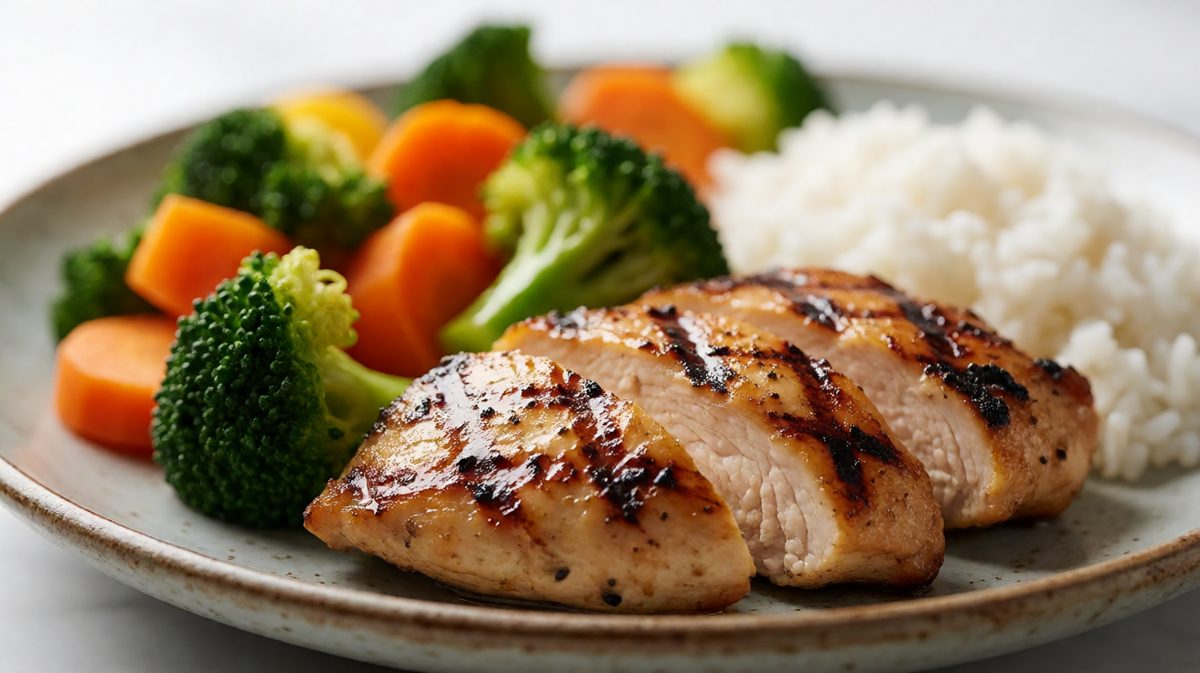
- 7:00 PM to 7:45 PM — Meal 2: The Anchor Feast: Consume 60% to 65% of daily calories (approx. 1,200–1,400 kcal). A comprehensive feast of lean steak or grilled chicken, roasted sweet potatoes, olive oil, and steamed green vegetables.
- 8:00 PM — Window Closes Permanently: Transition into the 20-hour fast. This allows a mandatory 2.5-hour buffer between last bite and 10:30 PM bedtime, preventing acid reflux and ensuring resting heart rate drops during deep slow-wave sleep.
Chronological Step 2: The 20-Hour Fasting Phase Management
Sustaining 20 consecutive hours of fasting every single day requires managing hydration checkpoints and biological ghrelin hunger waves. Ghrelin operates on an automated circadian clock: it surges at traditional meal times (8:00 AM, 12:30 PM) and naturally recedes within 45 minutes even if no food is consumed.
To glide smoothly through the 20-hour fasting block:
- Morning Hydration (7:00 AM – 9:00 AM): Drink 24 ounces of filtered water infused with 400 mg sodium and 200 mg potassium chloride. Electrolytes prevent morning headaches and maintain plasma volume.
- Midday Focus Window (11:30 AM – 2:00 PM): Consume black coffee, unsweetened green tea, or sparkling mineral water. Caffeine stimulates metabolic rate and acts as an effective mild adenosine receptor antagonist that suppresses appetite.
- Pre-Break Hydration Checkpoint (3:00 PM): Drink a final glass of water with a pinch of sea salt, then stop drinking 30 minutes before 4:00 PM to allow gastric stomach acids to reach full digestive potency.

Master 24-Hour Warrior Fasting Schedule Matrix
The operational schedule below details the complete 24-hour timeline for executing an optimal two-meal 20:4 fasting lifestyle.
| Timeline Window | Physiological Phase | Action / Nutrition Protocol | Hydration & Electrolyte Directive |
|---|---|---|---|
| 8:00 PM – 10:30 PM | Post-Prandial Clearing | Wind down; zero caloric intake | Herbal chamomile tea or plain water |
| 10:30 PM – 6:30 AM | Deep Sleep Fasting (8 hrs) | Cellular rest & metabolic regeneration | Zero liquid (prevent nocturia sleep disruption) |
| 6:30 AM – 12:00 PM | Fat Oxidation Window | Active work focus; ketones elevate | 1L water + 500 mg sodium + black coffee |
| 12:00 PM – 3:30 PM | Peak Autophagy / Fasting | Overcome noon ghrelin wave; light walking | Iced sparkling water + green tea |
| 4:00 PM – 4:30 PM | Meal 1 (Break-Fast Prime) | 35% Calories: Eggs, avocado, bone broth | Zero liquids during meal (protect stomach acid) |
| 4:30 PM – 7:00 PM | Gastric Emptying Buffer | Commute, chores, light resistance workout | Light room-temperature water sips |
| 7:00 PM – 7:45 PM | Meal 2 (Anchor Feast) | 65% Calories: Steak, sweet potato, greens | Zero liquids during meal |
| 8:00 PM | Fast Commences (Hour 0) | Window locked; stopwatch started | Rinse mouth; begin evening hydration pause |
Following this structured schedule ensures that practitioners capture the metabolic advantages of a 20-hour fast without suffering nutritional deficiencies or sleep disturbances.
Macronutrient and Caloric Density Rules for a 4-Hour Window
Because the feeding window is short, nutrient density is essential. Consuming low-calorie, high-volume foods (such as massive raw salad bowls containing under 200 calories) fills the stomach with indigestible bulk, making it physically impossible to consume adequate protein.
Prioritize high-nutrient density: ensure total daily protein reaches at least 0.8 to 1.0 grams per pound of lean body mass (typically 120 to 160 grams of complete protein). Distribute this protein as 40 grams in Meal 1 and 80 to 100 grams in Meal 2. Incorporate calorie-dense healthy fats (extra virgin olive oil, grass-fed butter, whole eggs, nuts) to hit daily caloric targets without painful stomach stretching.
Frequently Asked Questions
Can I workout while fasting on a 20:4 schedule?
Yes. Many practitioners find high mental clarity training in a fasted state. The optimal training window is between 2:30 PM and 3:45 PM—just before your eating window opens at 4:00 PM. This allows you to complete your resistance or cardio workout and immediately transition into Meal 1 for rapid muscle protein synthesis.
What should I do if I cannot finish all my calories in 4 hours?
Do not force-feed yourself until you feel sick. If 4 hours feels too restrictive, temporarily expand your window to 18:6 (a 6-hour window) for two weeks to allow your stomach and digestive enzymes to adapt gradually before stepping down to 20:4.
Can I drink sparkling water or diet soda during the 20-hour fast?
Unflavored sparkling water is completely fine and helps blunt hunger signals. However, avoid artificial sweeteners (such as sucralose or aspartame) during extended fasts; in some individuals, the sweet taste triggers a cephalic phase insulin response that induces intense hunger cravings.
Is 20:4 safe to do every single day?
Healthy adults can maintain a 20:4 schedule sustainably provided daily micronutrient and caloric needs are met. However, individuals with a history of disordered eating, pregnant or nursing women, and individuals under high chronic adrenal stress should avoid extreme fasting windows. Always consult your medical physician before adopting a 20:4 schedule.
Customizing your fasting hours, transition schedules, and circadian windows? Use the interactive planning calculators on IF Window Calculator.